Could Owono face prison time after fatal tackle on Tenerife's Jesús de Miguel?


Andorra goalkeeper Jesús Owono could face criminal and civil liability after his challenge left Tenerife striker Jesús de Miguel critically injured and later dead, but Spain’s legal system requires more than a fatal outcome to establish guilt.
De Miguel died at 8:00 a.m. on Tuesday, November 3, Tenerife announced, a day after the collision during their 2-2 draw with FC Andorra. Owono was sent off for the challenge, which the referee described as a forceful, high-leg impact using excessive force while the ball was in play.
The key question is whether Owono’s tackle crossed the line from a dangerous football incident into criminal negligence. A red card records a breach of the game’s rules; it does not, by itself, prove a crime.
How the collision happened
The incident occurred late in the match at Tenerife’s Heliodoro Rodríguez López stadium. Tenerife had led 2-0 before Andorra scored twice to make it 2-2.
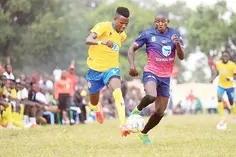
De Miguel chased a ball around the middle of the pitch as Owono came out of his penalty area to challenge him. The goalkeeper jumped with his knee raised. De Miguel fell unconscious and players immediately called for medical assistance.
Acaba de cambiarle la vida a Owono, portero del @fcandorra. Según @sport, desde el punto de vista jurídico, la gravedad de las lesiones no supone automáticamente la existencia de un delito. Sin embargo, el Código Penal español permite exigir responsabilidades cuando se demuestra que una conducta ha superado los riesgos propios de la práctica deportiva. El artículo 142 del Código Penal establece penas de entre uno y cuatro años de prisión para quien cause la muerte de otra persona por imprudencia grave. En los supuestos de imprudencia menos grave contempla multas de tres a dieciocho meses.
— ⚽GOL SIN VAR ❌🖥️ (@GolSinVAR) November 3, 2026
Medical staff treated him on the pitch before he was taken to hospital. Tenerife initially said he was in intensive care and stable despite the severity of his condition. The club later reported that his neurological condition had worsened before announcing his death the following morning. The referee suspended the match after players and officials said they could not continue. The score remained 2-2.
What Spanish criminal law says
Article 142 of Spain’s Criminal Code covers homicide caused by negligence. It provides for one to four years’ imprisonment where a death results from imprudencia grave—serious negligence. Where the negligence is classified as less serious, the penalty is a fine of three to 18 months.
For Owono to face criminal liability, investigators would need to establish that his conduct amounted to legally culpable negligence and caused De Miguel’s death. They would examine the footage, the referee’s report, the players’ positions, the nature of the challenge and whether Owono could reasonably have avoided the collision.

The issue is not simply whether Owono intended to play the ball. A challenge can be criminally negligent even without an intention to injure, but the prosecution would need to prove without reasonable doubt that the danger created exceeded the risks normally accepted in football.
The referee’s description of excessive force is relevant evidence. It is not a judicial finding of gross negligence, and there is no verified report that Owono has been charged or that a formal criminal investigation has been opened.
Civil liability is a separate question
Article 1902 of Spain’s Civil Code allows compensation to be claimed where a person causes harm through fault or negligence. In a football injury case, the question is whether the challenge exceeded the ordinary risks of the sport and caused legally compensable damage.

A 2018 Valencia Provincial Court ruling illustrates the distinction. A player who suffered a fractured tibia and fibula after a goalkeeper’s challenge sought damages, but the court dismissed the claim because the evidence did not establish that the intervention exceeded football’s normal risks. The ruling stressed that a foul or sending-off does not automatically create civil liability.
Owono’s case would be assessed on its own evidence, particularly given the fatal outcome. If criminal liability were established, Articles 109, 110, 113 and 116 of the Criminal Code provide for compensation for damage arising from the offence, including harm suffered by family members and other third parties.