U-turn of the century! Why CAF shockingly dumped 4-year AFCON plan to bring back the 2-year war


In what can only be described as the most stunning administrative U-turn in modern African football history, the Confederation Africaine de Football (CAF) Executive Committee (EXCO) has unanimously decided that the Africa Cup of Nations (AFCON) will return to taking place every two years.
The shocking announcement completely dismantles the controversial decision CAF took just last year to move the continent's flagship tournament to a four-year cycle.
DON'T MISS THIS: ‘Big congratulations’ - Victor Osimhen new baby breaks internet
Speaking at the decisive CAF Strategy Conference in Cabo Verde, CAF President Dr. Patrice Motsepe revealed that the continent's football governing body was forced to aggressively re-assess and throw out the four-year plan due to a massive, multi-million dollar financial reality check.
The Financial Collapse of the "Nations League"
The sudden return to the traditional format was triggered by the failure of CAF's proposed new tournament: the Africa Nations League Pan-African Competition.

Originally designed to replace the biennial AFCON and run every two years, insider analysis revealed that the new Nations League would require "several years" just to get off the ground, leaving a catastrophic financial black hole.
Without the massive broadcasting and sponsorship revenues that a two-year AFCON guarantees, African football stood no chance of remaining globally competitive or self-supporting.
The Confédération Africaine de Football (“CAF”) Executive Committee (“EXCO”) today unanimously decided that the CAF Africa Cup of Nations (“AFCON”) will return to taking place every Two Years. The President of CAF Dr Patrice Motsepe announced at the CAF Strategy Conference in Cabo Verde which was held from 7-9 October 2026, that the CAF EXCO would be re-assessing and reconsidering the decision it took last year, for the AFCON to take place every Four Years. https://t.co/fYNKBPhPae
— CAF Media (@CAF_Media) October 30, 2026
Addressing the dramatic shift, Dr. Patrice Motsepe insisted the sudden backtracking was done to protect the continent's 54 member associations and players playing abroad:
“The decision by the CAF EXCO that the CAF AFCON should take place every Two Years was based on advancing, protecting and promoting the interest of African Football," Motsepe declared. "We were concerned by the several years required before the proposed new Africa Nations League could make the substantial financial and football development contributions for African Football to be globally competitive."

DON'T MISS THIS: The bitter truth — Rivers United coach demands urgent funding and infrastructure overhaul after Rangers’ Algerian disaster
The New AFCON Roadmap (2027–2033)
With the two-year cycle officially locked back in, CAF has mapped out a relentless schedule for the coming decade. Fans won't have to wait long for the fireworks to resume:
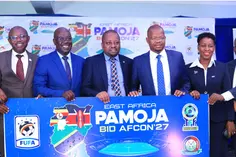
2027: TotalEnergies CAF AFCON hosted across Kenya, Tanzania, and Uganda.
2028: The subsequent tournament locked into the calendar.
2029: NO AFCON (Skipped due to the 2030 FIFA World Cup tradition, which bans continental tournaments in World Cup years).
2031 & 2033: The tournament returns to full biennial momentum.
DON'T MISS THIS: Obafemi Martins at 42: Inter Milan Paid Tribute, But Birmingham City Stole the Show
"Bringing People Together"
Beyond the massive financial rescue mission, Motsepe emphasized that the tournament is too culturally significant to be hidden away every four years.

“The AFCON competition is also about celebrating African Football and Africa’s rich and diverse cultures, customs and traditions and bringing people together from Africa’s 54 Countries, the African Diaspora and throughout the world," the CAF President added. "The CAF EXCO decision is in the best interest of African Football."
The news is already causing an absolute meltdown across African sports group chats. While club managers in Europe will undoubtedly be fuming at the prospect of losing their top African stars every two years again, fans across Nigeria and the continent are celebrating the return of Africa's greatest footballing war.